.png)
Userled shipped its biggest set of updates ever in the first half of 2026: AI agents that build campaigns, full-funnel coverage from 1:1 to 1:Many, contact-level personalization across LinkedIn, and a live data layer that puts ABM performance inside the AI tools your team already uses. The result is simple: a team of three can now cover the ground that used to take a team of ten.
The gap between ABM strategy and ABM execution has always come down to one thing: people. Not enough of them, stretched too thin, spending their hours on content production and campaign setup instead of the conversations that actually close deals.
That equation just changed. Over the past sixty days we've shipped the largest wave of releases since Userled launched – and the through-line is capacity. Every update below removes work that used to require dedicated headcount, so your existing team can do more of what only people can do.
Here's what's new, and why each release lets a smaller team punch far above its weight.
Key takeaways
These updates add capabilities that used to require dedicated headcount:
- AI agents build on-brand, research-backed, CRM-aware experiences moving from a plain-language brief to campaign in minutes
- Full-funnel ABM spans the entire 1:1 to 1:Many spectrum in a single platform, delivered over LinkedIn and email
- LinkedIn activation now covers contact-level personalization, new campaign objectives, and new ad formats
- The sales plugin enables reps to generate personalized assets in seconds
- An MCP server lets AI assistants query live Userled data
The content bottleneck is gone
Ask any ABM team what slows them down and the answer is almost always the same: content. Building one personalized landing page used to mean a brief, a designer, a copywriter, a round of revisions, and a quiet prayer that the CRM data was still current. Multiply that by a target account list and the maths simply doesn't work.
Two new AI agents rewrite that equation entirely.
AI Content Agent: on-brand pages, grounded in real content
The Content Agent generates full Userled templates – built from your brand's products, tone, and visual identity – inside a chat experience. It's the difference between a generic AI page builder and one that already knows your business.
.png)
What sets it apart is that it's guided by your brand kit: colours, fonts, tone of voice, messaging, product lines, and personas. You choose a blueprint (an ABM page, a sales microsite, an event invite, a competitive page), a target (industry, segment, account, or persona), and a key message. The agent then curates the asset library it draws from – logos, case studies, screenshots, and proof points it's allowed to use.
The output is grounded in real, approved content, not hallucinated marketing copy. From there you refine with AI directly in the template editor. Tell it to "make the tone more engaging" or "swap in a different case study for the customer block," and watch the page rebuild in real time through live streaming.
AI Campaign Agent: from brief to landing page in minutes
The Campaign Agent is the first step in what we're calling agentic campaign creation: describe the campaign you want in plain language, and the agent builds it. Name the target account, the angle, and the goal – it researches the account or contact, pulls context from your CRM, and produces a fully ready to launch campaign from the ad to the personalized landing page.
.png)
Start from a pre-approved template so branding and layout are already locked in, or start from scratch with a blueprint. Upload a call transcript or a brief as a PDF, paste it straight into chat, or just describe what you need – then iterate in conversation until the page is right.
Why it matters for revenue teams: a junior SDR can now produce what once required a content marketer and a designer. This isn't about replacing people. It's about removing the skill barrier that kept sales waiting on marketing to hand over 1:1 content.
Full-funnel ABM: from 1:1 to 1:Many, in one platform
Userled now covers the entire ABM spectrum – 1:1, 1:Few, and 1:Many – in a single platform, so you can match the depth of personalization to the value of the account instead of forcing every campaign into one mode.
The industry talks about "personalization at scale" as if it's a single setting. In reality, ABM is a spectrum, and most tools make you pick a spot on it: go deep on a handful of accounts, or go broad and generic on the rest. Userled now spans the whole thing – and, crucially, identifies engagement at the account and contact level no matter which mode you're in.

1:1 – deep personalization for your highest-value accounts

A bespoke, research-backed experience built for a single target account. This used to be the expensive end of ABM; with the Content and Campaign Agents, it's now something a single operator can produce in minutes rather than a project that ties up marketing and design for days.
1:Few – one asset, many accounts, zero hassle
Build one asset and deliver it to a cluster of accounts and contacts – through Userled's native, direct LinkedIn integration or over email – without rebuilding it for each. One build, delivered across your chosen channel, sized for a segment rather than a single logo.
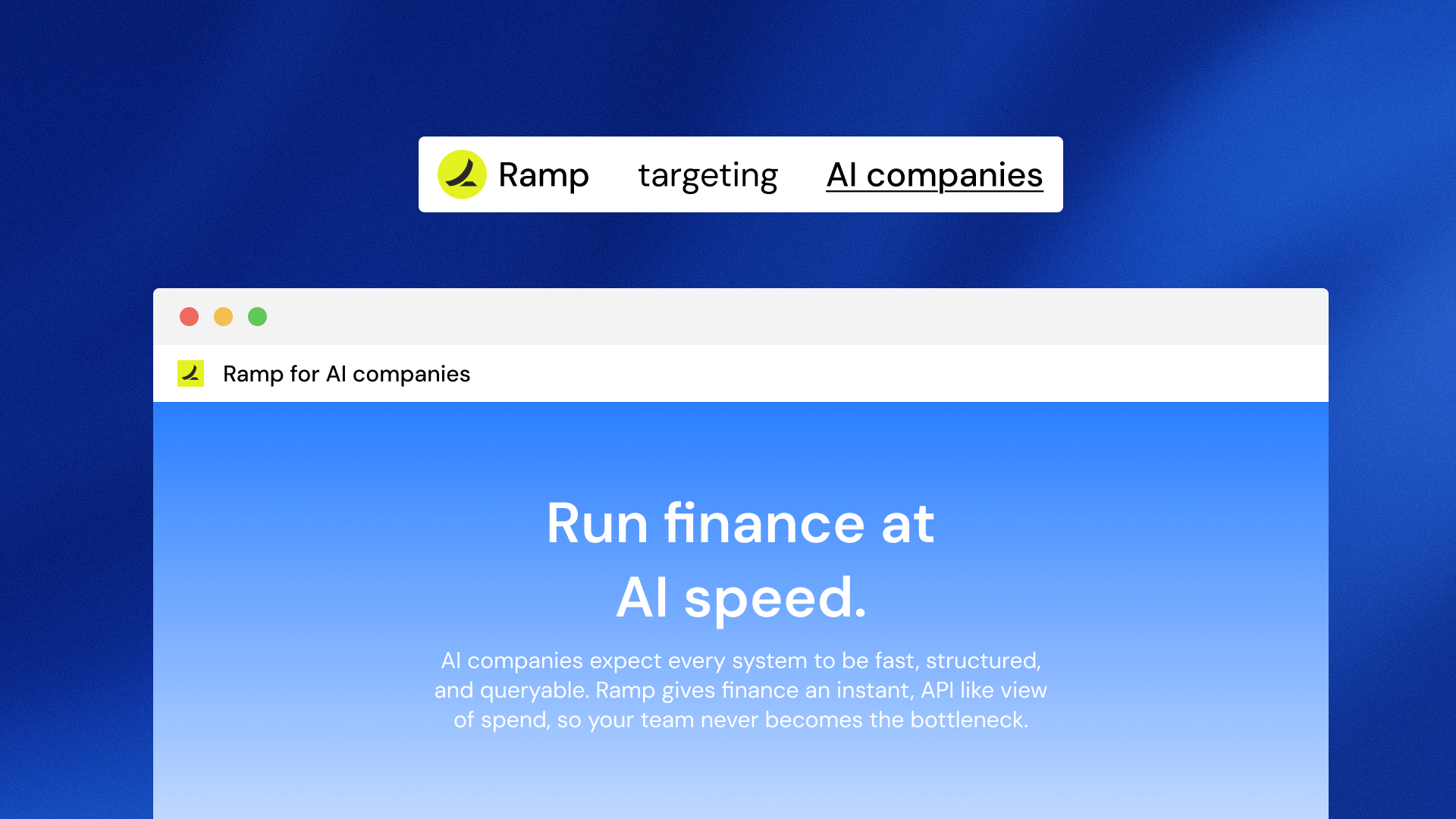
And because Userled identifies engagement at the account and contact level, you still see exactly which of the right accounts are responding – so a lightweight 1:Few campaign gives you real ABM signal, not just impressions. It's the sweet spot most teams have been missing: the efficiency of one asset with the visibility of true account-based targeting.
1:Many – always-on pipeline in the background
A single asset shared across many targets with no manual personalization – ideal for always-on campaigns that build pipeline quietly, migrating standard LinkedIn campaigns into Userled, and teams easing into ABM for the first time. Userled layers account- and contact-level identification on top, so even un-personalized reach still tells you who's engaging and which accounts to prioritise next.
Why this matters strategically: you no longer choose between depth and reach. You can run 1:1 for your top-tier accounts, 1:Few for a target segment, and 1:Many always-on – at the same time, from one platform, with a single view of engagement across all three. That's full-funnel ABM: the right level of effort for every account, and nothing falling through the gaps in between.
We haven't moved fast enough on AI over the past few months. The reason is simple: adding AI into a product is easy. Adding AI in a way that creates real value from day one is much harder." – Yann, CEO, Userled
Activate across LinkedIn, end to end
LinkedIn is now a full activation channel inside Userled – with contact-level ad personalization, new campaign objectives, and new ad formats – so you can plan, run, and measure LinkedIn ABM without leaving the platform.
Paid has always been where ABM personalization quietly falls apart: you target the account, then serve everyone the same creative. This wave closes that gap and widens what you can run on LinkedIn in the first place.
Personalization down to the individual contact
Userled now personalizes LinkedIn ad body text for each individual contact, not just each account. Until now, contact-level personalization in paid ABM was a gap across the entire ecosystem. It's closed.
Drop variables like %FIRSTNAME%, %JOBTITLE%, %COMPANYNAME%, or %INDUSTRY% into the new personalized ad body field, and LinkedIn resolves them at the moment of delivery. If a variable can't be resolved – the viewer hasn't opted in, or the data isn't available – they see your standard ad text instead. Nothing breaks.

The competitive edge is real: Account-based ads already tend to drive at least 5x more engagement; layering contact-level personalization on top gives teams room to push those numbers further still.
New campaign objectives
Userled now supports more of LinkedIn's campaign objectives natively, so you can align each campaign to the outcome you're actually after – not just the one format the tool happened to support.
- Engagement – optimise for interaction and build first-touch familiarity with your target accounts, fuelling the always-on layer of your programme.
- Lead generation – capture leads directly through LinkedIn Lead Gen Forms, then tie every submission back to the right account and campaign inside Userled.
New ad formats
New formats give you more ways to show up in the feed: document ads are supported now, with video ads coming soon. Document ads let you put a richer, swipeable asset in front of buyers – a natural fit for research-led ABM – while video support (on the way) will extend the same account-based targeting and measurement to your highest-impact creative.
Finally, ABM activated by sales
Sales adoption is where ABM programmes live or die. If reps won't use the tool, the strategy never leaves the slide deck.
The sales plugin is now a daily driver
.png)
Five major releases in sixty days turned the Chrome extension from a nice-to-have into something sales teams actually keep open all day. The headline changes:
- LinkedIn auto-detect surfaces the prospect you're viewing – no manual search
- 4–10 second page generation, down from 30+ – the difference between "I'll use it" and "I'll skip it"
- Editable contact fields let reps tweak details inline before generating assets
- Asset history with view tracking shows what you've sent, to whom, and whether they opened it
- Smart images create personalized visuals to paste straight into LinkedIn messages or Slack
- Unified prospect view – one screen for a prospect's asset history and engagement activity
None of these are feature additions for their own sake; they're friction removals. Every second saved and every click eliminated makes it more likely reps reach for Userled instead of falling back on generic outreach.
Reporting that works for leaders and operators
The most underrated challenge in ABM isn't execution – it's proving the execution is working. And it has to be proven to two very different audiences: the leaders who fund the programme and need to grasp its impact in seconds, and the operators who run it and need campaign-level detail on tap. These updates serve both, and meet each where they already work.
Userled MCP Server: query your ABM data in plain language
The Userled MCP Server lets AI assistants like Claude, ChatGPT, and Cursor pull live ABM data directly – so leaders can ask a quick question and operators can build a full report, all without dashboards or SQL.

MCP (Model Context Protocol) is an open standard that connects AI assistants to live data sources. Connect any MCP-compatible client and ask in plain English: "How are my active campaigns performing this month?", "Which accounts are most engaged right now?", "Show me the pipeline influenced by campaign X." The assistant reads live data from Userled and answers on the spot.
For leaders, that means the numbers they need without ever logging into a platform – impact, at a glance, from the AI tools they already use. For operators, it's a reporting engine: query live data and assemble the exact view you need, on demand, instead of exporting to a spreadsheet and rebuilding it by hand. This is what it looks like when ABM data becomes ambient – available wherever the conversation is already happening.
Weekly and monthly digests: impact on a cadence
Two digests keep ABM performance in front of the people who need it – a weekly view for operators running the programme, and a monthly view for leaders tracking overall impact.
.png)
The weekly digest lands every Monday with the previous week's campaign performance and account activity – the operating detail that helps operators steer live campaigns. The monthly digest zooms out to the bigger picture of overall ABM impact for leadership. Both arrive in the inbox, no login required.
Why it matters: the people who approve ABM budget and headcount rarely sit inside the platform. Putting performance in front of them on a steady cadence – and letting operators self-serve the detail – is what builds the visibility that keeps programmes funded.
What's coming next
The Campaign Agent is the opening move in a broader shift toward agentic ABM – where AI handles configuration, production, and optimisation, and people handle strategy and relationships. On the near-term roadmap:
- Scaled AI personalization – generated experiences tailored to accounts, personas, contacts, and industries, moving beyond one at a time
- Full campaign orchestration – the Campaign Agent configures the entire campaign: audience, assets, channels, and distribution
- Video ads for LinkedIn – account-based targeting and measurement extended to your highest-impact creative
- Sales plugin adoption dashboard – visibility into how reps are actually using the tool, so you can coach and optimise
- Autonomous optimisation – bidding agents and performance tuning that run without manual intervention
The direction is consistent: keep taking the work that scales badly with headcount off your team's plate, so the team you already have can operate like one twice its size.
Author

Generated £1.3M pipeline by focusing on UTM parameters personalisation.


Generated £1.3M pipeline by focusing on UTM parameters personalisation.